What Are HWID and HWID Spoofer? How Computer Identification Works in Online Games
Learn how a computer hardware fingerprint works, how HWID differs from IP, what an HWID ban means and how identifier masking is understood.
An account ban in an online game seems straightforward enough: break the rules, receive a ban and lose access to the profile. Sometimes, however, something unusual happens. A person creates a new account, launches the game again on the same computer and soon faces another restriction. This is usually where the term HWID enters the conversation.
Those four letters do not conceal a single secret number permanently attached to a computer. The reality is more interesting.
Contents
What is an HWID?
HWID stands for Hardware ID, but it is not entirely accurate to think of it as a computer passport containing one unique number.
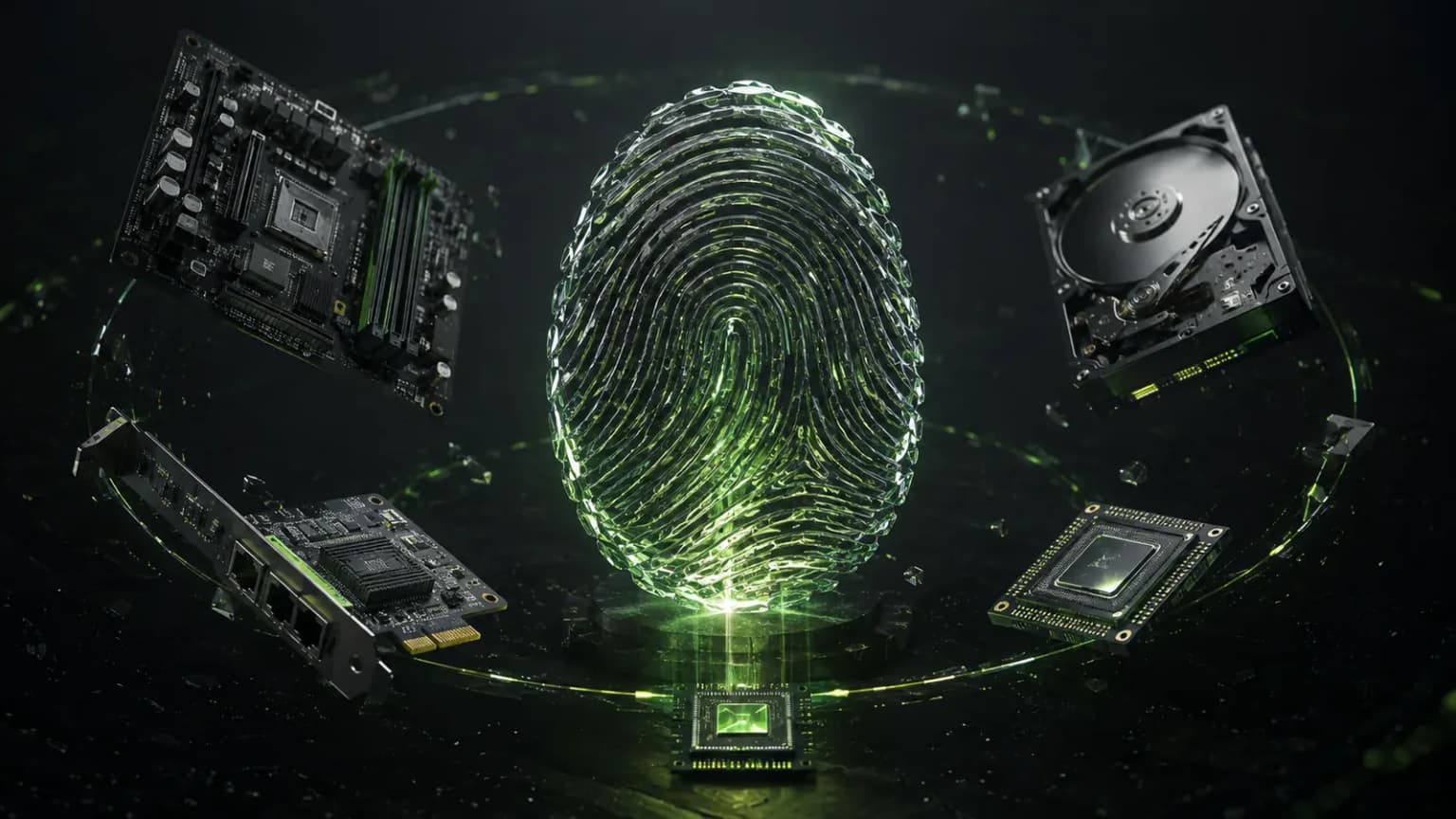
A computer consists of many components. Storage devices have their own service data, as do motherboards and networking hardware. The operating system also stores and makes certain information about the device configuration available to programs. A game or anti-cheat can take some of this data and use it to create its own fingerprint for the computer.
Two different games do not necessarily see the same HWID. One developer may consider several hardware parameters, another may add system information, while a third may construct the identifier in a completely different way.
The question “What is my computer's HWID?” is therefore imprecise on its own. You first need to know which program or protection system is being discussed.
Why an anti-cheat identifies a computer
Suppose a player is banned for a serious violation. If the protection remembers only the account name, the restriction is too easy to circumvent: create a new profile and email address, then return.
An IP address is not perfect either. It can change, and several devices sometimes share a single public IP.
A hardware fingerprint gives the system another reference point. Protection can use it to:
- associate several game accounts with one computer;
- recognise repeat connections after sanctions;
- notice sudden changes to a device configuration;
- supplement information about the IP address, account and game client;
- identify suspicious activity involving several profiles on one PC.
This does not mean that one matching parameter automatically results in a ban. Proper anti-cheat systems work with a combination of signals. Otherwise, replacing an SSD would suddenly make half the player base look like suspicious strangers to the server.
What makes up an HWID?
Developers do not normally disclose the exact set of parameters. The reason is obvious: a detailed guide to identifying a computer would quickly become a guide to evading that identification.
Broadly speaking, the system works as follows. A program obtains the device information available to it, converts that information into the required form, correlates the values and creates an identifier.
The result may not contain the actual serial number of any component, but a value derived from it. The server does not need to store the source data in a readable form. It only needs to understand whether it has encountered this computer before. At the same time, the fingerprint does not have to remain unchanged throughout the life of the device.
A computer may have one SSD today and a different one a year later. The user might then replace the graphics card, followed by the motherboard several years after that. A good system must distinguish a normal upgrade from a situation in which several parameters suddenly begin behaving unusually. This is why binding an identity to a single component would be too simplistic.
What is an HWID Spoofer?
HWID Spoofer is a general name for programs associated with changing or masking hardware identifiers. The meaning is apparent from the word spoof: substitution or imitation. The physical hardware does not turn into something else. Instead, the program attempts to make certain system information appear different to other software. This is where the confusion common on the internet begins.
There is no single standard followed by every spoofer and every anti-cheat. If one system uses one set of parameters and another uses a different set, the same method of changing data will produce different results. Claims such as “changes HWID in every game” should therefore be treated with great caution. There is no universal hardware identifier, so a universal way of working with one is doubtful.
How an HWID ban differs from an ordinary ban
A standard ban applies primarily to an account. The profile can no longer be used, but the computer itself may formally remain outside the sanction. An HWID ban involves a stronger association: the system remembers the device or its fingerprint and takes it into account during later connections. There is an important caveat, however. A player cannot see the server's internal logic.
If a new account is blocked quickly, the user may conclude that it was an HWID ban. The actual reason could instead be linked account data, another violation, saved client information or different anti-fraud signals. The term is therefore often used too broadly.
What happens after hardware is replaced?
A new component can indeed change some of a computer's characteristics. Replace a storage device and the storage information will differ; replacing a motherboard will usually change even more. This does not mean that one particular component exists whose replacement automatically changes the entire hardware fingerprint for every game.
An anti-cheat may consider several signals at once. If one changes while the others remain the same, the device may still be recognised. Replacing the entire computer is, of course, different: that genuinely is new hardware with a different set of characteristics.
HWID and IP are not the same thing
The two concepts are often mentioned together even though they refer to different things. An IP address relates to the network and internet connection. An HWID relates to a device and its characteristics.
A laptop might use home Wi-Fi today, mobile internet tomorrow and a hotel network the day after. The IP address changes, but the computer remains the same. The reverse can also happen. Several devices in a home connect through one router and may share a public IP as far as outside services are concerned, yet they are three different computers. Network information alone is therefore rarely sufficient for reliable identification.
Why are there so many myths about HWIDs?
Largely because users do not know which data a particular protection system collects. Developers remain silent, and forums, rumours and categorical advice quickly fill the gap. Some people are certain that the entire HWID is stored in the motherboard. Others believe the storage device is the decisive component, while still others confuse a hardware identifier with an IP address or Windows data. In practice, it is better to start with a simple idea: in a modern online game, an HWID is a concept for a hardware fingerprint rather than the name of one specific number.

Key points
An HWID helps a game or anti-cheat understand which device is being used to launch it. The system may combine several computer characteristics to create its own identifier.
An HWID Spoofer is associated with changing some of this data through software. Because different protection systems collect different information, however, it is incorrect to describe either HWID or the way it can be changed as one universal mechanism.
The more modern an anti-cheat becomes, the less it depends on one signal. Information about the device, account, software environment, network and user behaviour may all be considered together. An HWID should therefore be viewed not as a magical computer serial number, but as one element of a broader identification system.