How Anti-Cheat Systems Work in Online Games: Core Principles and Technologies
A clear guide to how anti-cheat systems inspect game clients and memory, use drivers, server-side checks and behavioural analysis.
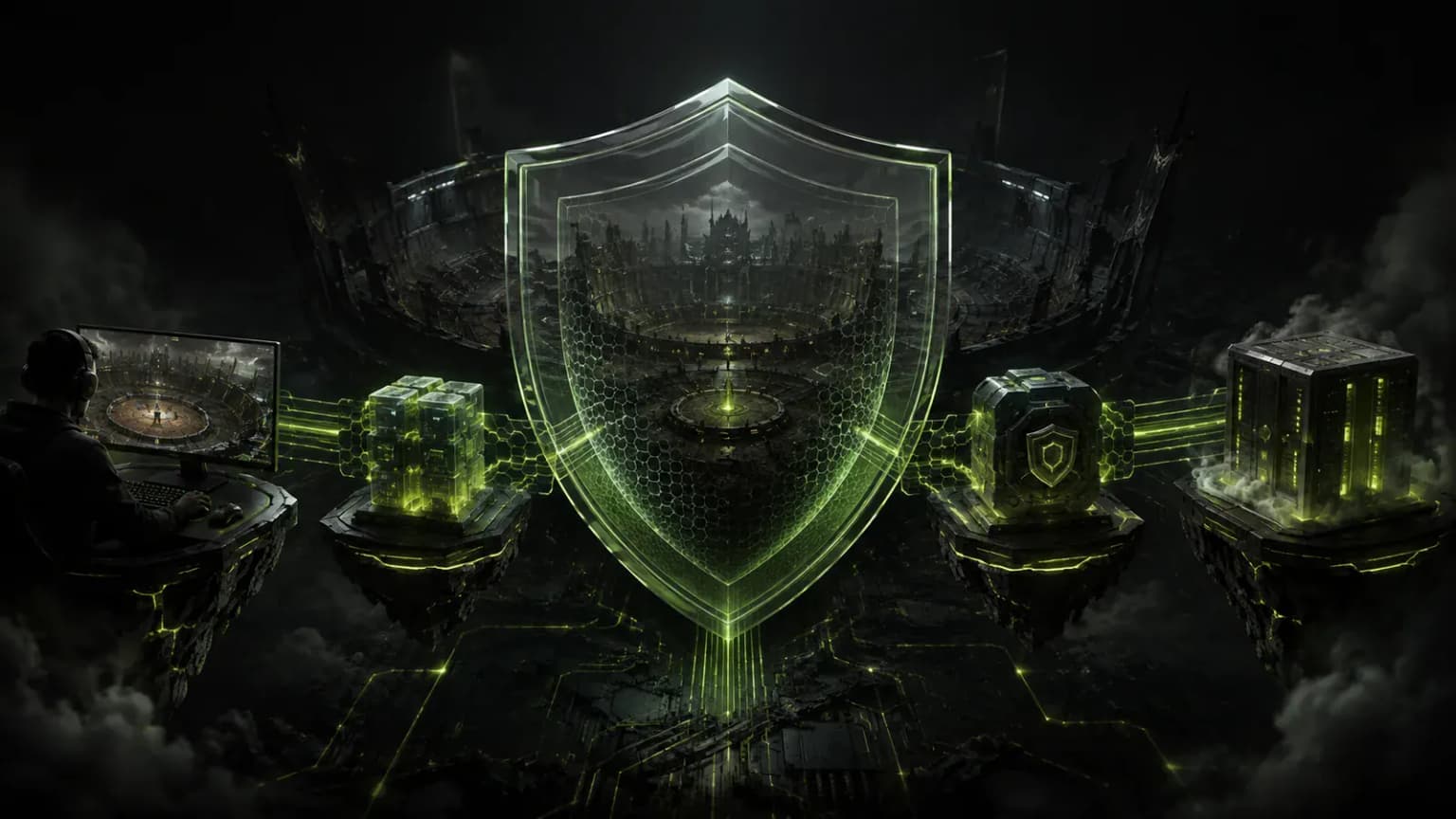
Cheats in online games are nothing new. As soon as games became competitive, some people wanted to gain an advantage not through reaction speed, experience or map knowledge, but with third-party programs. Developers responded with anti-cheat systems.
Today, an anti-cheat is no longer a simple utility that looks for a suspiciously named file on a computer. In major online games, protection works on several levels at once. It checks the game client, monitors what happens in memory, analyses programs running alongside the game and, at the same time, examines what the player does during a match.
Even so, no protection is completely effective. Cheats change, as do the ways in which they are launched. Anti-cheat systems have to keep catching up.
Contents
- How an anti-cheat knows something is wrong with the game
- What happens in game memory
- Why anti-cheat systems use drivers
- The server monitors the player too
- Can a cheat be detected from behaviour alone?
- Why a ban may arrive several days later
- Why anti-cheat systems still cannot eliminate cheats completely
How an anti-cheat knows something is wrong with the game
The most straightforward method is to search for known cheat signatures. Developers obtain a sample of a program, study it and add specific signatures to a database. The anti-cheat can then detect similar processes, modules or files.
This method quickly runs into a problem: the program can be changed. Sometimes rebuilding a new version, altering part of the code or changing the launch method is enough to stop an old signature from matching. A database of known cheats is therefore not sufficient on its own.
It is more important for an anti-cheat to understand exactly what is happening around the game process. For example, a program may begin accessing game memory, attach an additional module or attempt to interfere with the client after it has already launched.
This does not always indicate a cheat. A computer may also be running overlays, video-recording software, mouse utilities, hardware-monitoring tools and dozens of other applications. A good anti-cheat should not ban a user because of one suspicious event. It gathers several signals and evaluates the overall picture.

What happens in game memory
While running, a game constantly stores data in RAM. This includes information needed at that moment: the state of a character, objects on the map, coordinates, weapon parameters and much more. Some prohibited programs attempt to access precisely this data.
This is one of the activities an anti-cheat can monitor. If an unknown process starts repeatedly reading particular regions of memory or tries to modify their contents, the system has reason to examine it more closely.
There is another possibility: third-party code is injected directly into the game process. The anti-cheat then checks which modules were loaded with the game and whether important parts of the code changed after launch.
In practice, there are many more checks. They usually fall into several broad categories:
- checking game files and libraries;
- monitoring access to memory;
- searching for known cheat signatures;
- controlling third-party modules and drivers;
- validating player actions on the server;
- analysing unusual behaviour during matches.
The value lies in combining these methods. If one layer of protection misses an intervention, another may still detect it.
Why anti-cheat systems use drivers
Some anti-cheat systems install their own driver. Users often dislike this, for understandable reasons: a driver operates with much broader privileges than an ordinary application.
There is, however, a technical problem. A normal application cannot see everything that happens in the system. If a prohibited program also uses a driver and operates at a low level, an anti-cheat without similar access may simply be unable to observe some of its actions. Protection developers therefore sometimes work at the same level. This lets the anti-cheat monitor driver loading, memory access and certain activities that would remain hidden from a regular application.
The cost of this approach is a higher standard for the anti-cheat itself. An error in an ordinary program will usually only cause that program to close. An error in a driver can lead to problems with Windows.
This is why anti-cheat systems with kernel-level access regularly cause debate. On the one hand, this approach makes life harder for cheat developers. On the other, the user has to trust a program with extremely broad privileges.
The server monitors the player too
Not every check is performed on the computer. The server side is actually very important to an anti-cheat because some violations are easier to identify there.
Suppose a character travels in one second a distance that would be impossible even at maximum speed. The server does not need to know which program caused it. It only needs to recognise that the action falls outside the rules of the game. The same applies to firing rate, interaction with objects, command execution speed and other parameters. Modern games therefore try to move as many important calculations as possible to the server. The game client sends a request: the player pressed a button, fired a shot or started moving. The server makes the final decision. It checks whether the action is valid in the current situation. If everything were entrusted to the client, changing the outcome of the game would be considerably easier.
Can a cheat be detected from behaviour alone?
Yes, and this is a separate field of detection. An anti-cheat may fail to find a suspicious program but still notice irregularities in the user's actions. It can examine how the crosshair moves, how quickly a player reacts when an opponent appears and how often identical actions are repeated. One unusual incident means almost nothing. A player may land an extraordinary shot by chance or simply have a very good match.
Long-term statistics are far more informative. Human performance is uneven. Reactions are faster one day and slower the next. The crosshair overshoots slightly, and movements differ from one another. An automated tool can produce clearer and more repetitive patterns.
These patterns become visible over a long period. Statistical models and machine learning may be used here to identify players whose behaviour differs significantly from that of the majority.
This does not mean that a neural network sees one strange shot and immediately issues a ban. Such analysis normally provides an additional signal, which is then compared with other data.
Why a ban may arrive several days later
Players often assume that if an anti-cheat did not block an account immediately, it detected nothing. That is not necessarily true. Developers sometimes deliberately delay sanctions. If a cheat stops working five minutes after an update, its author can quickly work out where to look for the cause.
If information is collected first and hundreds or thousands of accounts are then blocked at once, identifying the exact detection method becomes harder. This is how ban waves work. A delay can also help reduce false positives. An anti-cheat has to distinguish prohibited software from ordinary programs that interact legitimately with the game or the operating system. One event is not enough to make that distinction.
Why anti-cheat systems still cannot eliminate cheats completely
Anti-cheat developers and cheat developers are engaged in a constant race. A new detection method appears, and people start looking for a way around it. A bypass is found, and the protection is updated. The cycle then repeats. Sometimes it is not even the cheat itself that changes, but the way it is launched, transfers data or interacts with the computer. An anti-cheat is therefore not expected to solve the problem permanently in a single step. That is technically close to impossible. Its real purpose is to make cheats harder to use, shorten their effective lifespan and increase the likelihood of detection.
Systems that do not rely on one method handle this task best. Client checks are supplemented with server-side control, memory analysis and behavioural statistics. Such an anti-cheat can still be challenged, but doing so becomes much more difficult, and any update to the game or its protection can change the rules again.